
TALOS SYRIA
WEEKLY ANALYSIS REPORT
December 26, 2025
Disclaimer: The information and opinions expressed in this Report are the views of Talos and constitute a judgment as at the date of the Report and are subject to change without notice. The information and opinions expressed in this Report have been formed in good faith on the basis of the best information and intelligence available at the time of writing. Vesper Group accepts no liability arising out of or in connection with the comments made or the information set out in this Report and the reader is advised that any decision taken to act or not to act in reliance on this Report is taken solely at the reader’s own risk.
For questions regarding this report or regarding a subscription, please contact us here:
https://talosinformation.com/contact-us/
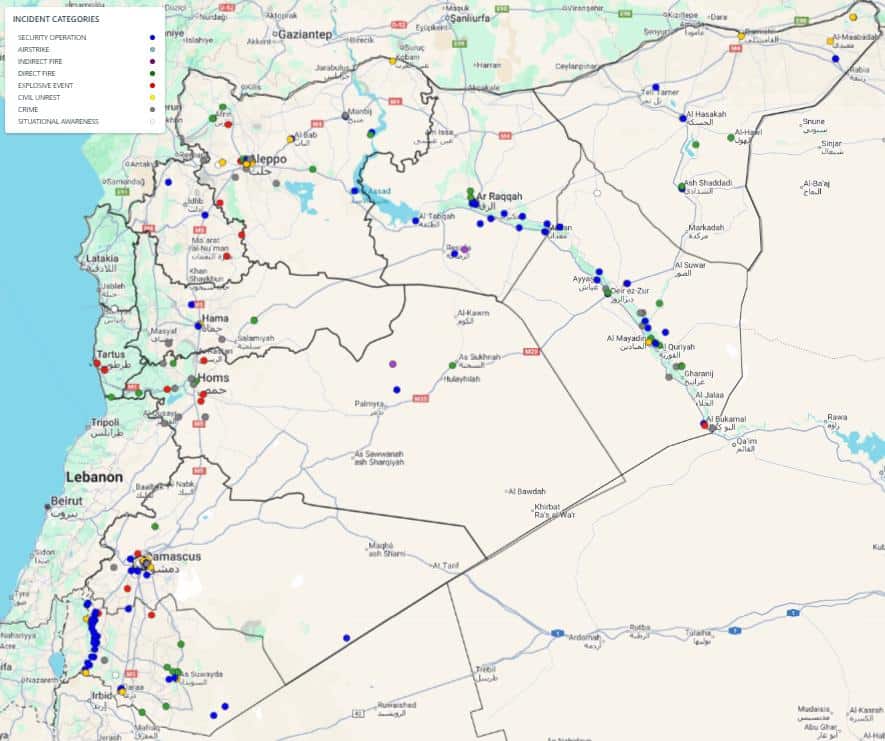
WEEKLY INCIDENT MAP
KEY DEVELOPMENTS
•Aleppo Clashes Mark Most Serious Security Escalation of the Period
•SDF–Damascus Talks Continue Following Aleppo Escalation
•US-Led Coalition Escalates Operations Against Islamic State in Central and Eastern Syria
•Coalition Raids and Patrols Target IS Leadership and Networks
•Iraqi–Syrian–Coalition Operation Arrests IS Suspects in
•United States Repeals Caesar Act Sanctions on Syria
STRATEGIC AND POLITICAL DEVELOPMENTS
ALEPPO CLASHES MARK MOST SERIOUS SECURITY ESCALATION OF THE PERIOD
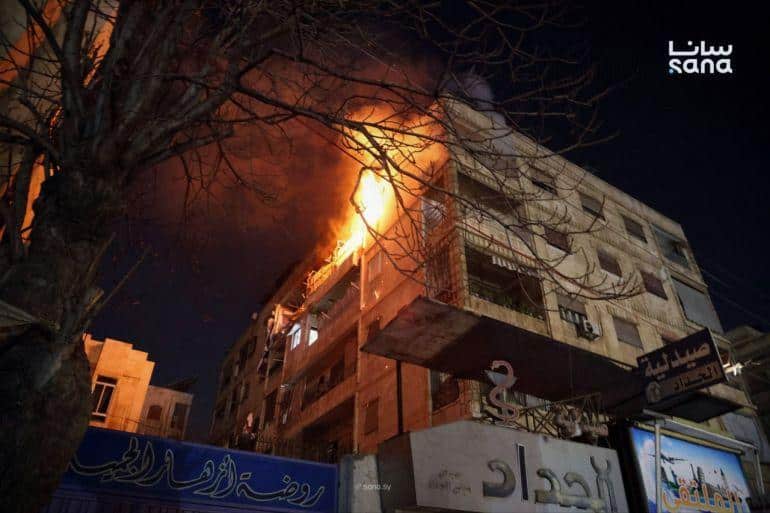
Aleppo emerged as the most significant national security flashpoint during the reporting period following large-scale clashes between Syrian government forces and SDF-affiliated Asayish units in the Sheikh Maqsoud and Ashrafieh neighborhoods. Fighting erupted after joint checkpoints were targeted and rapidly escalated into heavy exchanges involving mortars, RPGs, artillery, tanks, and anti-tank guided missiles. Shelling impacted multiple residential districts, resulting in civilian casualties, including women and children, damage to hospitals and civilian infrastructure, and displacement from western Aleppo neighborhoods.
Both sides issued competing narratives regarding responsibility for the escalation. Syrian authorities stated that the Syrian Democratic Forces withdrew unilaterally from joint checkpoints before targeting civilians and security personnel. Asayish units, in contrast, accused government-aligned factions of launching a premeditated assault following months of siege-like conditions in the affected neighborhoods. The clashes prompted demonstrations across Aleppo city and countryside, with rival rallies expressing either support for the Syrian state or solidarity with residents of Sheikh Maqsoud and Ashrafieh.
At approximately 22:30 on 22 December, U.S. mediation resulted in a ceasefire following direct engagement by the U.S. Special Envoy to Syria and U.S. Central Command. The ceasefire aimed to halt further escalation, reduce the risk of IS exploitation, and support broader negotiations related to SDF integration. In response to the violence, Aleppo’s governor suspended schools and government offices in the city center, while emergency and health services were placed on high alert.
SDF–DAMASCUS TALKS CONTINUE FOLLOWING ALEPPO ESCALATION
In the days following the Aleppo clashes, the SDF negotiating committee separately announced that it had reached a preliminary agreement with the Syrian government on integrating SDF forces into the Syrian army. According to the committee, the framework allows for three SDF brigades to remain intact within the Syrian army’s structure, while joint technical committees continue discussions on roles, command arrangements, and organizational details. The SDF described the talks as constructive and stated that efforts are now focused on translating the framework into practical implementation steps.
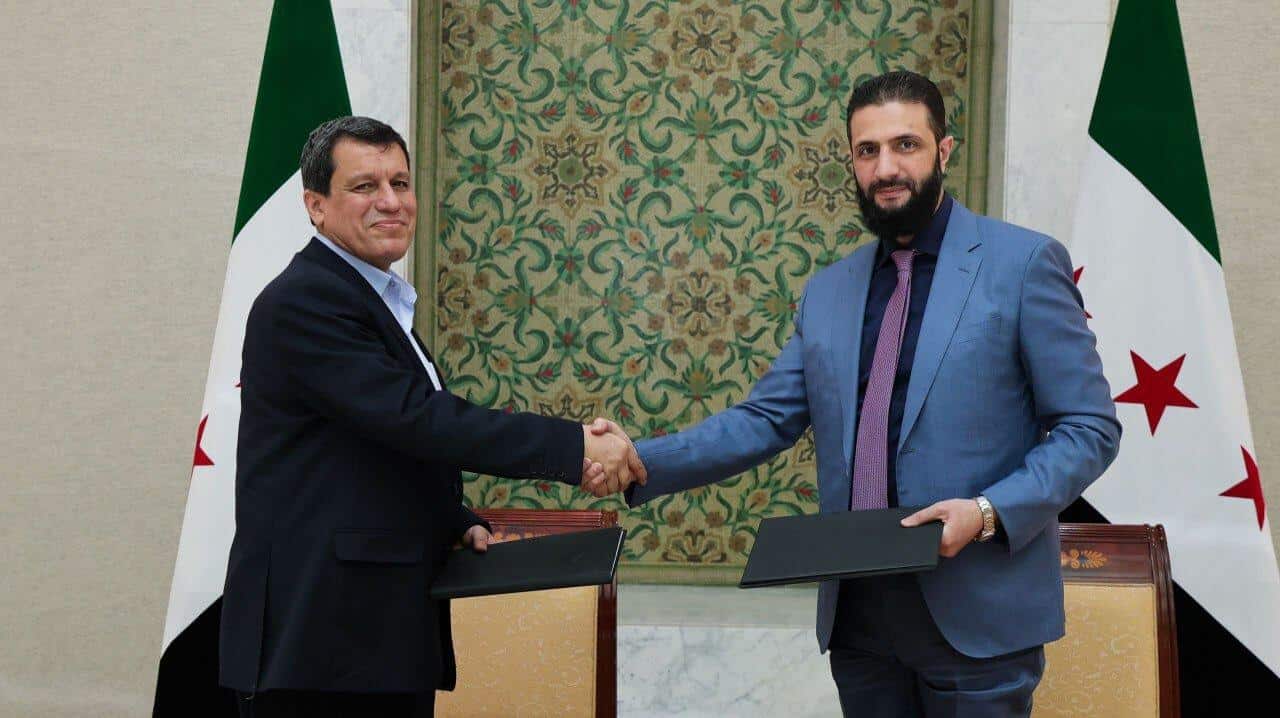
Separately, SDF commander Mazloum Abdi announced that the SDF had reached an initial understanding with the transitional government in Damascus regarding the future status of the force and the Kurdish-led administration in northeast Syria. Speaking during an advisory meeting in Rojava, Abdi stated that the two sides had agreed in principle on integrating military forces in a manner serving the public interest, while stressing that Syria’s future political system must remaindecentralized. He noted that constitutional questions remain unresolved and will require extended dialogue.
Abdi confirmed that limited confidence-building measures linked to the March 10 agreement with interim President Ahmed al-Sharaa had already been implemented, including prisoner exchanges. However, he emphasized that core disagreements persist, particularly over governance models. Damascus continues to advocate for a centralized state structure, while the SDF and other minority actors favor decentralized or federal arrangements. Abdi stated that inclusive governance and equitable participation are essential elements of any future constitution.
Parallel reporting indicated that intensive negotiations are ongoing, with Western actors—particularly the United States, Britain, France, and Germany—pressing both sides to finalize a military framework before the end of the year. According to informed sources, a U.S.-brokered arrangement could include the integration of SDF and internal security forces into the Syrian Ministries of Defense and Interior, with several SDF divisions retained within the national military structure. Discussions reportedly remain unresolved on command authority, deployment of government forces in the northeast, decision-making mechanisms, and the establishment of specialized units, including women’s and counter-terrorism formations.
Damascus has publicly downplayed expectations of an imminent agreement. A well-informed government source stated that reports circulating in foreign media were inaccurate and speculative, confirming only that the government had received a response to a recent Ministry of Defense proposal that remains under review. The source added that formal communication with the SDF was currently paused, though meetings could resume. These divergent accounts indicate that while both sides acknowledge conceptual progress, substantial gaps remain.
US-LED COALITION ESCALATES OPERATIONS AGAINST ISLAMIC STATE IN CENTRAL AND EASTERN SYRIA
In the early hours of 20 December, US Central Command announced the launch of Operation Hawkeye Strike in Syria following the 13 December Islamic State (IS) attack near Palmyra that killed U.S. personnel. CENTCOM stated that U.S. forces struck more than 70 IS targets across central Syria, including sites in Homs, Deir ez-Zor, and Raqqa provinces. The operation involved fighter jets, attack helicopters, artillery, and more than 100 precision-guided munitions, with support from Jordanian fighter aircraft. According to CENTCOM, the strikes targeted IS infrastructure, weapons storage locations, and logistical nodes.
CENTCOM further reported that since the Palmyra attack, U.S. and partner forces have conducted 10 operations in Syria and Iraq, resulting in the deaths or detention of 23 IS operatives. The command added that more than 80 operations had been carried out in Syria over the previous six months as part of ongoing efforts to disrupt IS networks.
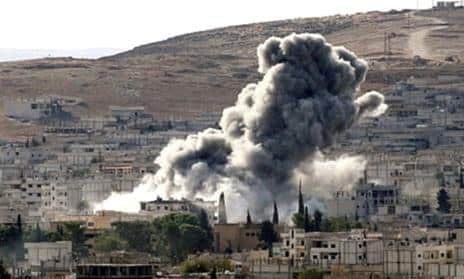
U.S. President Donald Trump described the strikes as “very serious retaliation,” while the U.S. Department of Defense characterized the operation as a declaration of vengeance rather than the start of a broader war. In response, the Syrian Ministry of Foreign Affairs issued a statement reaffirming Syria’s commitment to combating IS and calling on the United States and the Global Coalition to support counter-IS efforts.
COALITION RAIDS AND PATROLS TARGET IS LEADERSHIP AND NETWORKS
Parallel operational activity was reported earlier in the week. On 18 December, media sources stated that International Coalition forces conducted a dawn raid in the town of Maadan in the Raqqa countryside, killing Abu Hamza al-Athari, described as a senior IS figure involved in planning and executing attacks in Deir ez-Zor Governorate, including the Palmyra attack. Coalition aircraft reportedly followed the raid with additional airstrikes targeting IS elements and sleeper cells in the area.
Separately, Coalition forces accompanied by the Syrian Democratic Forces conducted a patrol in Basirah, eastern Deir ez-Zor, as part of routine security and monitoring activities. Cargo aircraft also landed at Shaddadi Airbase in southern Hasaka Governorate to sustain Coalition logistics and operational readiness.
IRAQI–SYRIAN–COALITION OPERATION ARRESTS IS SUSPECTS
The U.S. airstrikes followed a coordinated cross-border security operation involving Iraqi forces earlier in the week. On 18 December, the Iraqi Joint Operations Command, cited by the Security Media Cell, announced that the Falcons Intelligence Cell carried out a helicopter-borne operation inside northeastern Syria targeting IS suspects. The raid was conducted in coordination with Syrian government forces and with technical and operational support from the U.S.-led international coalition, under the direct supervision of the Iraqi Commander-in-Chief of the Armed Forces.
According to Iraqi statements, the operation targeted locations in the villages of Rabi’a and Iskenderun in southern Hasaka province near the Iraqi border and resulted in the arrest of multiple former IS members. Iraqi media identified two detainees as Iraqi nationals Himmat Saad and Musa’id al-Khashan al-Juwaid, both reportedly from the Shammar tribe, along with additional suspects whose identities were not disclosed. The Security Media Cell described the detainees as “important individuals” wanted by the Iraqi judiciary, without specifying the charges.
The Syrian Observatory for Human Rights separately reported that Kurdish internal security forces, known as the Asayish, were also involved in the operation, indicating a broader level of coordination on the ground. Iraqi authorities described the raid as reflecting expanding regional and international cooperation against IS networks operating across borders, while Syrian and coalition sources did not provide further operational details or casualty figures.
UNITED STATES REPEALS CAESAR ACT SANCTIONS ON SYRIA
On 19 December, U.S. President Donald Trump signed the National Defense Authorization Act for Fiscal Year 2026 into law, formally repealing the Caesar Syria Civilian Protection Act and ending one of the most restrictive sanctions regimes imposed on Syria since 2019. The repeal dismantled secondary sanctions targeting Syrian state institutions, senior officials, and foreign entities involved in reconstruction, energy, banking, and infrastructure, removing a major legal barrier to economic recovery and regional re-engagement.
The repeal signaled a shift in Washington’s policy from comprehensive punitive measures toward conditional engagement. While the sanctions framework was lifted, the legislation retained congressional oversight provisions requiring regular reporting on Syria’s counterterrorism efforts, protection of minorities, and regional conduct. The law also includes mechanisms allowing for the re-imposition of targeted sanctions if agreed benchmarks are not met.
Syrian President Ahmed al-Sharaa welcomed the decision, describing it as a historic turning point and stating that it marked the first day Syria has lived without sanctions after years of economic pressure. In a public address, he framed the repeal as the end of a prolonged period of collective hardship and the beginning of a new phase focused on recovery, reconstruction, and reintegration. He thanked Syrians for their resilience, expressed appreciation to President Trump and members of the U.S. Congress, and acknowledged regional leaders who supported Syria’s return to political and economic normalization, calling on domestic and international actors to seize the opportunity to rebuild.
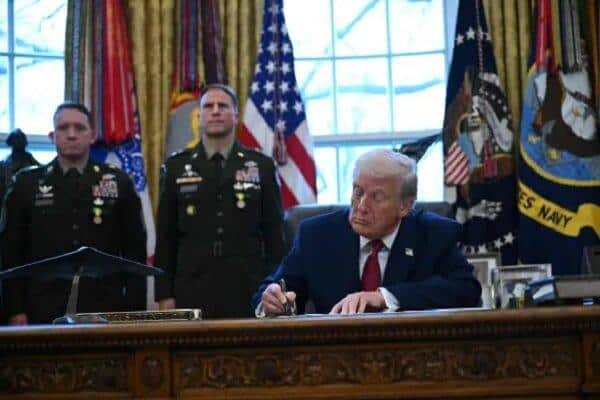
U.S. Special Envoy to Syria Tom Barrack also welcomed the repeal, describing it as an opportunity for Syria’s recovery and citing President Trump’s appeal to “give Syria a chance.” He characterized Syria’s future as a Damask carpet woven from a diverse social fabric and strengthened through regional cooperation, expressing hope that this process could help lay the foundations for tolerance, prosperity, and renewed trust across the region.
The immediate effect of the repeal is a significant reduction in secondary sanctions risk for non-U.S. investors and commercial entities, particularly those operating in or engaging with Syria’s reconstruction, energy, infrastructure, banking, and trade sectors. The removal of the Caesar Act’s mandatory sanctions provisions lowers a major legal and financial barrier that had discouraged foreign companies, insurers, and banks from engaging in Syria-related activity. As a result, regional and international firms may find greater scope to pursue commercial engagements, negotiate contracts, and explore investment opportunities that were previously considered high risk due to potential U.S. penalties.
Despite this shift, the repeal does not eliminate all sanctions-related constraints. U.S. authorities retain the ability to impose targeted sanctions on specific individuals, entities, or sectors linked to terrorism, human rights abuses, narcotics trafficking, or regional destabilization. Congressional oversight mechanisms embedded in the legislation require ongoing reporting on Syria’s conduct, and provisions remain in place to allow for the re-imposition of sanctions should agreed benchmarks not be met. In parallel, U.S. export controls and compliance requirements—particularly for U.S.-origin goods, technology, and dual-use items—continue to apply, meaning that due diligence and regulatory screening remain essential for commercial actors.
In practical terms, the new environment is expected to enable gradual and selective re-engagement rather than immediate normalization. Financial institutions and investors are likely to proceed cautiously, prioritizing transactions involving lower-risk sectors, clearly documented end-users, and transparent ownership structures. While the repeal improves the overall feasibility of doing business in Syria, commercial activity will continue to depend on compliance assessments, counterparty screening, and evolving political and regulatory conditions, leaving investment momentum uneven across sectors and regions in the near term.
DAMASCUS WEEKLY SECURITY OVERVIEW
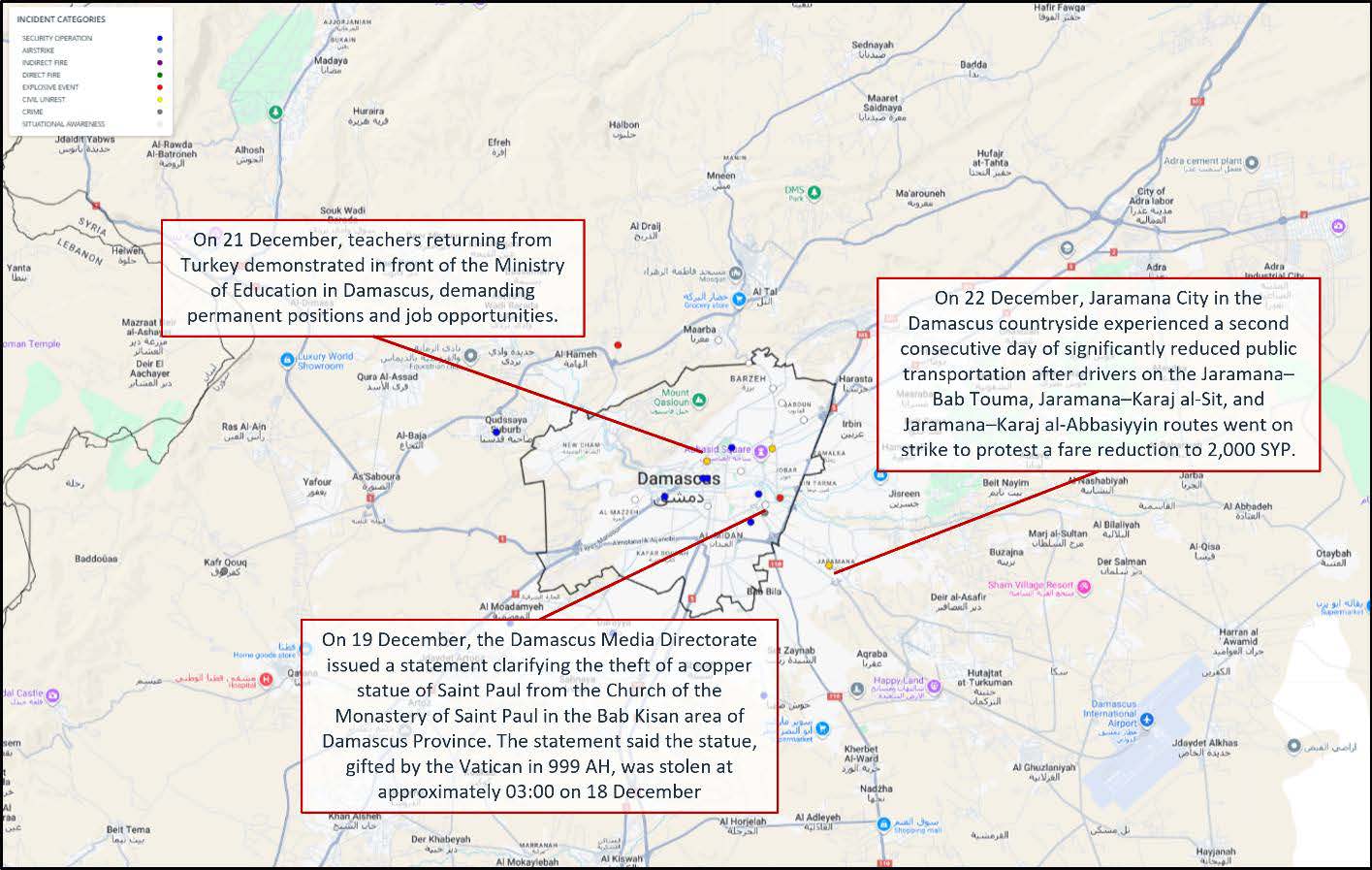
Security activity in Damascus and its surrounding countryside during the reporting period included hostile incidents, civil pressure linked to economic conditions, and a series of law enforcement and counter-narcotics operations. Along the Damascus–As Suwayda road, GoS-linked media reported that National Guard forces targeted the ISF Matouna checkpoint. No casualties were reported. Separately, an explosive ordnance disposal team member was killed when a mine detonated during a training course focused on mine removal and installation, though no further details were provided regarding the circumstances of the incident.
Additional hostile and coercive activity was reported in the Qatana area of the Damascus countryside, particularly in Kafr Qouq village. Local sources accused the Qatana district director of covering up individuals suspected of involvement in a murder in the village, alleging that arrest warrants issued by the Public Prosecutor had not been enforced. Political Security forces reportedly arrested four residents after they publicly commemorated the killing of their cousin one year later, an action villagers described as selective and retaliatory. Residents also alleged that one suspect moved freely in and out of a security center and was granted office space under the protection of a local security official. Further reports stated that armed men threw hand grenades at a house in the village to intimidate residents and enforce displacement, amid claims that authorities sought to pressure approximately 20 families into leaving the area under allegations of collaboration with the former regime.
Public demonstrations linked to economic grievances were reported in Jaramana, where transportation disruptions continued for a second consecutive day. Bus drivers carried out a strike in protest against fare reductions, which they described as economically unsustainable in light of rising fuel prices and maintenance costs. The strike led to continued service disruptions and reflected broader socioeconomic pressure in the Damascus countryside.
Security operations during the period included counternarcotics activity, arrests linked to criminal investigations, and law enforcement measures targeting illicit trade. Syrian counter-drug forces, acting on intelligence coordination with Iraqi authorities, dismantled an organized smuggling network moving Captagon from Lebanon through Syria toward Iraq. Authorities arrested four suspects and seized approximately 200,000 Captagon pills. In parallel, the UN Office on Drugs and Crime reported significant disruption to Syria’s industrial-scale Captagon production over the past year, while warning that existing stockpiles remain sufficient to sustain long-term regional trafficking.
In separate incidents in Damascus City, unknown individuals stole a copper statue of Saint Paul from the Church of the Monastery of Saint Paul in the Bab Kisan area. The Damascus Media Directorate stated that the theft was financially motivated and carried out using simple tools due to the value of the copper. No information was reported regarding recovery of the statue. Syrian security forces also arrested Salim Hamdani, a Jewish antiquities dealer with Syrian citizenship, in the Old City market on suspicion of illegal antiquities trafficking. His shop was reportedly raided, artifacts were confiscated, and he was transferred for interrogation, where he remained detained. Separately, the Israeli army announced that it was conducting military exercises in the Mount Hermon area south of Damascus, involving intensive movement of warplanes and ground forces.

 and then