
Disclaimer: The information and opinions expressed in this Report are the views of Talos and constitute a judgment as at the date of the Report and are subject to change without notice. The information and opinions expressed in this Report have been formed in good faith on the basis of the best information and intelligence available at the time of writing. Vesper Group accepts no liability arising out of or in connection with the comments made or the information set out in this Report and the reader is advised that any decision taken to act or not to act in reliance on this Report is taken solely at the reader’s own risk.
For questions regarding this report or regarding a subscription, please contact us here: https://talosinformation.com/contact-us/
Executive Summary
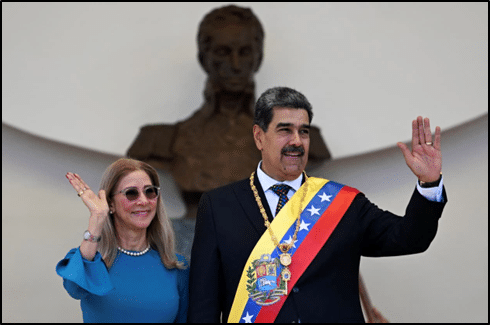
In the early hours of 3 January 2026, the United States executed a large-scale, coordinated military operation against the Venezuelan government, marking the most consequential U.S. intervention in Latin America in decades. President Donald Trump publicly confirmed that Venezuelan President Nicolás Maduro and his wife, Cilia Flores, were captured during the operation and removed from Venezuelan territory. Multiple U.S. officials stated that Maduro will be transported to the United States to face longstanding federal criminal charges.
According to U.S. officials cited by CBS News, the operation was executed by U.S. Army Delta Force, supported by air and naval assets deployed in the Caribbean. While U.S. officials describe the mission as successful with no American fatalities, Venezuelan authorities allege significant casualties among government officials and civilians—claims that remain unverified.
The strike follows months of escalating U.S. military pressure, including a maritime interdiction campaign, seizures of Venezuelan oil tankers, and repeated kinetic strikes on alleged drug-smuggling networks linked to the Maduro regime. The operation represents a decisive shift from coercive pressure to direct regime removal and introduces substantial uncertainty regarding Venezuela’s internal stability, regional security dynamics, and international legal precedent.
Background: Escalation and Military Buildup
Beginning in late August 2025, the Trump administration initiated an unusually large military buildup in the Caribbean, deploying aircraft carriers, surface combatants, and surveillance assets. By December, the deployment included the USS Gerald R. Ford, along with additional warships and maritime patrol aircraft, constituting the largest U.S. naval presence in the region in decades.
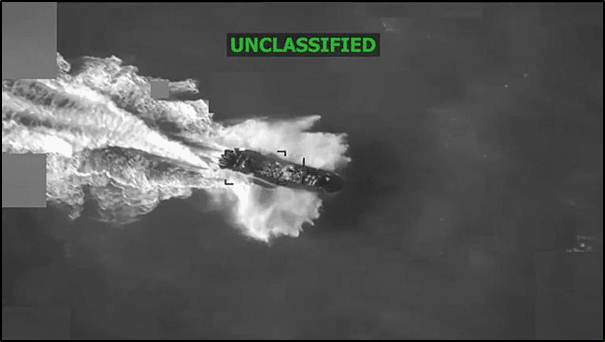
This buildup coincided with an expanded U.S. counter-narcotics campaign. Since September, U.S. forces conducted more than 30 strikes on vessels alleged to be transporting drugs, killing at least 115 individuals according to NPR reporting. The administration accused Maduro of leading the so-called “Cartel of the Suns,” a narco-trafficking network allegedly embedded within the Venezuelan state.
In parallel, the United States seized two Venezuelan oil tankers, struck port infrastructure described by President Trump as drug-loading facilities, and imposed what amounted to a de facto maritime blockade on Venezuelan exports. In late December 2025, U.S. intelligence agencies reportedly conducted a land-based strike on a Venezuelan port facility, marking the first confirmed attack on Venezuelan territory prior to the 3 January operation.
The 3 January Strike: Execution and Scope
The operation commenced around 0200 local time under cover of darkness. Residents of Caracas and surrounding states reported explosions, fires, and sustained low-altitude aircraft activity for over an hour. Journalists cited by NPR described detonations near La Carlota military airbase and multiple fires on the runway that were rapidly extinguished.
According to U.S. officials cited by CBS News and the New York Times, Delta Force elements, supported by U.S. intelligence and air assets, executed a targeted raid to capture Maduro. The New York Times reported that the operation was enabled by a CIA source inside the Venezuelan government who tracked Maduro’s movements in the days prior to the strike.
President Trump later stated that Maduro and Flores were initially taken aboard the USS Iwo Jima and are being transferred to the United States, where they face drug, weapons, and conspiracy charges unsealed in the Southern District of New York. Attorney General Pam Bondi confirmed the indictments and stated that both individuals would be prosecuted in U.S. courts.
Trump characterized the strike as “unbelievable,” stating that no U.S. personnel were killed and only minor injuries were sustained. He added that U.S. forces were prepared to conduct a second wave of strikes but judged it unnecessary due to the operation’s effectiveness.
Venezuelan Response and Immediate Effects
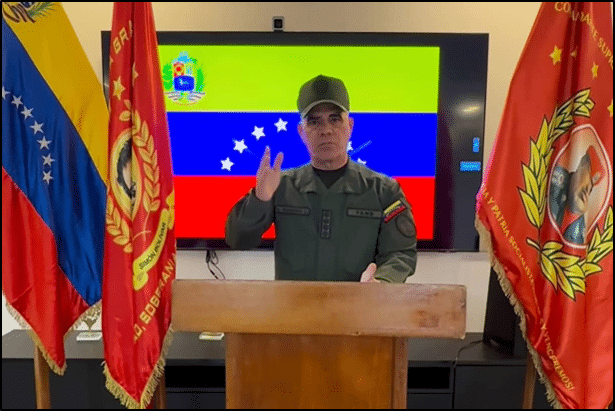
The Venezuelan government declared the strikes a “grave military aggression” and a flagrant violation of national sovereignty. In statements broadcast on state television and Telegram, senior officials claimed that U.S. forces struck both civilian and military targets in Caracas, Miranda, Aragua, and La Guaira states.
Vice President Delcy Rodríguez alleged that government and military officials were killed in the strikes and stated that authorities did not know Maduro’s whereabouts, demanding proof of life. Interior Minister Diosdado Cabello appeared publicly flanked by security forces, vowing resistance and asserting that the state would not collapse under pressure.
Power outages were reported in parts of Caracas, and Venezuelan air defenses were placed on alert, though their operational effectiveness remains unclear. The U.S. Federal Aviation Administration issued a NOTAM prohibiting U.S. aircraft from Venezuelan airspace, while the U.S. Embassy ordered American citizens to shelter in place.
Regional and International Reaction
Regional reaction has been marked by alarm and uncertainty. Several Latin American governments warned of humanitarian fallout and mass displacement, while Colombia reportedly reinforced its border security. No regional government publicly endorsed the operation.
Globally, Russia, China, and Iran condemned the strikes as violations of international law. The European Union called for de-escalation and clarification of U.S. intentions. International legal experts cited by multiple outlets raised unresolved questions regarding compliance with the UN Charter and the absence of publicly disclosed congressional authorization.
In public messaging, senior U.S. officials framed the operation as the removal of an illegitimate “narco-terrorist” regime. Deputy Secretary of State Christopher Landau described the event as “a new dawn for Venezuela,” while Secretary of State Marco Rubio suggested no further military action is anticipated.
Intelligence Assessment and Uncertainties
From an operational standpoint, the strike demonstrated overwhelming U.S. military superiority and effective suppression of Venezuelan defenses. However, several critical uncertainties persist:
- Maduro’s Custody Status:S. officials state Maduro is en route to the United States, but independent visual confirmation has not yet been released.
- Casualty Figures: Venezuelan claims of senior official and civilian deaths remain unverified.
- Legal Basis: The constitutional and international legal justification for the operation has not been formally articulated.
- Succession Dynamics: No clear plan for Venezuelan governance or security sector control has been announced.
- Follow-On Operations: While U.S. officials suggest no further strikes are planned, contingency options remain on the table.
The lack of transparent confirmation risks miscalculation and escalation if U.S. claims prove inaccurate or incomplete.
Outlook and Strategic Implications
With Maduro’s removal, Venezuela faces an immediate and volatile transition period characterized by unclear succession authority, potential military fragmentation, and heightened humanitarian risk. US President Donald Trump indicated that U.S. companies may play a major role in rebuilding Venezuela’s oil infrastructure, though broader reconstruction commitments remain undefined.
If command cohesion within the Venezuelan security apparatus collapses, localized violence and power struggles are likely. Conversely, if regime loyalists retain effective control, the risk of protracted instability and asymmetric retaliation will increase.
Strategically, the operation establishes a precedent for unilateral U.S. regime-removal operations in the Western Hemisphere, reshaping regional security calculations and intensifying great-power competition. The risk of escalation and long-term destabilization will remain elevated until governance, legal, and humanitarian questions are resolved.

 and then