
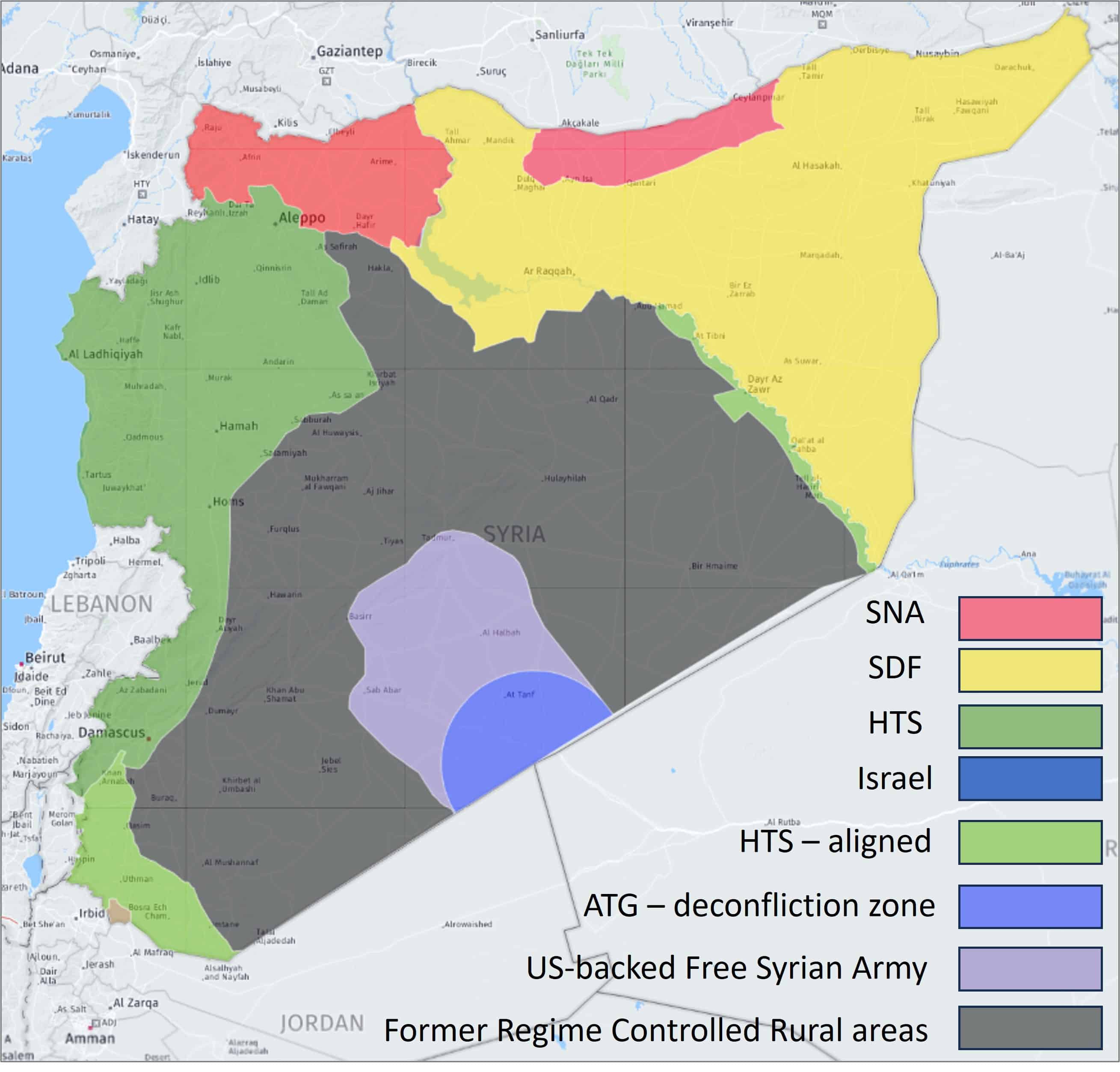
NATIONAL OVERVIEW
Nationwide incidents
SIGNIFICANT EVENTS
- EU agrees to roadmap for sanctions relief
- Russian delegation arrives in Damascus
- Turkish Foreign Minister says armed groups should be part of army
- Conflicting reports regarding duty reductions on Turkish exports
- Protests by former police officers following evacuation order
- Security campaign resulted in arrest operations
- Two killed and eight injured by remnant explosion in Daraa city
- SDF-SNA clashes continue in eastern Aleppo
- SDF arrest operations targeted tribal members in Deir Ez Zour
- Protest against Turkish operations in Hasaka province
- Sectarian tensions reported in Homs and Hamas provinces
- Protests in Latakia city linked to student and teacher demands
STRATEGIC AND POLITICAL DEVELOPMENTS
EU agrees to roadmap for sanctions relief
In a meeting on 27 January, the Foreign Ministers of the European Union member states agreed on a “roadmap” to gradually lift sanctions on Syria. EU Foreign Policy chief Kaja Kallas said a “political agreement” was reached to lift measures that are “most hindering the early buildup of the country and to move from there.” Kallas further reiterated that easing sanctions would help the “Syrian economy and help the country get back on its feet” but that the ministers also agreed on retaining “snap back” mechanisms in the event of human rights violations and other wrong steps being taken by the new government. Other EU officials, including Dutch Foreign Minister Caspar Veldkamp, said the aim of the agreement is to lift restrictions on the most pressing areas, such as banking and infrastructure, but that other sanctions, such as on weapons exports, will likely remain in place.
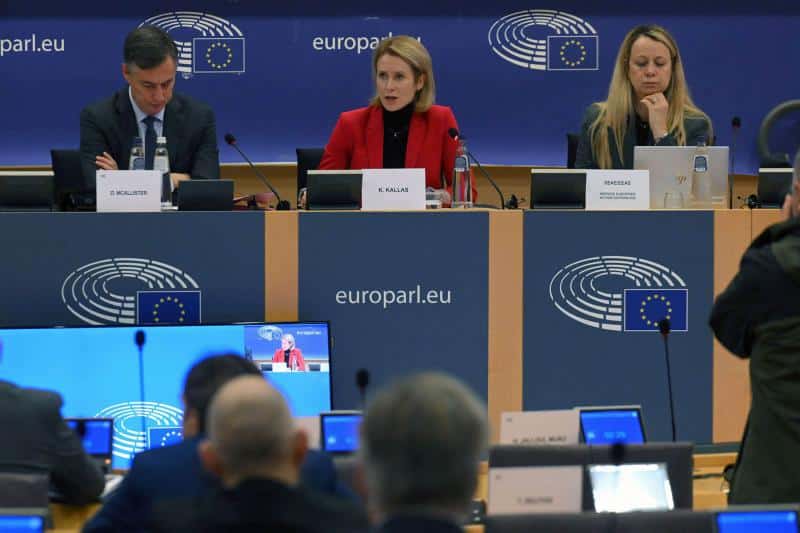
EU High Representative Kaja Kallas
The roadmap agreed to on 27 January was largely expected as EU officials have repeatedly expressed support for sanctions relief, but only on the condition that the new government remains committed to an inclusive political transition and respect for human rights. A step-by-step approach that allows the bloc to quickly reimpose sanctions is therefore the most likely way forward and the EU is expected to continue conditioning any practical measures to lift sanctions on the government’s demonstrated ability to fulfill what it says in practice. It is worth noting that the outcome of the 27 January only amounts to a political agreement and not a deal to ease measures immediately. In her remarks, Kallas emphasized that there are also technical issues that need to be resolved before any restrictions can be lifted.
Regardless, the meeting is a significant step forward and is set to pave the way for more concrete negotiations on which sanctions to lift over the coming weeks. Separate sources stated that beyond banking and infrastructure, restrictions on the energy and transportation sectors are most likely to be lifted at first yet this remains to be determined. In response to the announcement, Syrian Foreign Minister Asaad Al-Sheibani welcomed the agreement and expressed optimism that this decision would positively affect various aspects of life in Syria.
Russian delegation arrives in Damascus
For the first time since the fall of the government of President Bashar al-Assad, a delegation of Russian officials arrived in Damascus on a state visit. The delegation is led by Deputy Foreign Minister Mikhael Bogdanov and Presidential Envoy Alexander Lavrentiev. According to local sources, the meeting will be with de facto leader Ahmed al-Sharaa and Foreign Minister Al-Sheibani. No further details regarding the visit and the planned discussions were provided, and the HTS-led interim government has not officially commented on the visit.
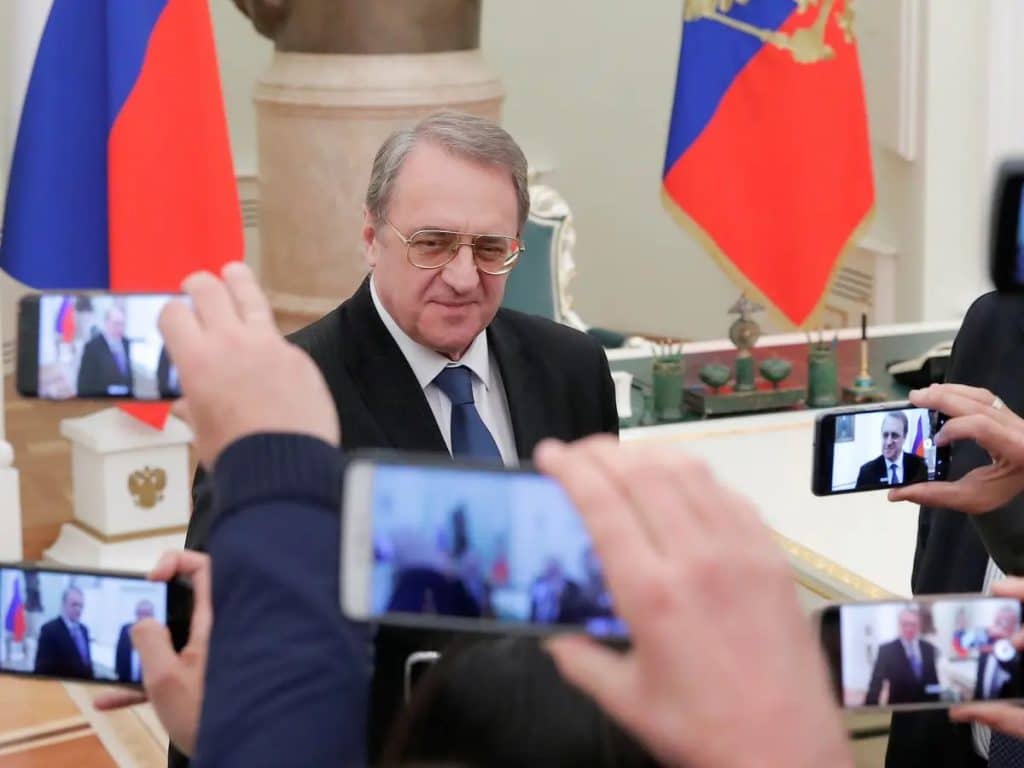
Russian Deputy Foreign Minister Mikhael Bogdanov
The timing of the meeting is notable following the government’s decision to terminate a leasing contract with Russian company STG Stroytransgaz regarding the port of Tartous earlier this month. Few details were provided officially, but the termination was seen as another step by the government to terminate Russia’s naval presence in the country and to cut relations more broadly. In a related development on 28 January, multiple sources reported that Russia began removing military equipment from the port of Tartous, with two Russian cargo ships – the Sparta and Sparta II – leaving the port. This was documented by multiple sources, including open-source satellite imagery and pro-Russian telegram channels claiming the Russian military has been removing equipment and property by air and sea since the leasing contract was terminated.
Turkish Foreign Minister says armed groups should be part of the army
Addressing the situation in Syria in an interview on 27 January, Turkish Foreign Minister Hakan Fidan expressed support for efforts led by the interim government to integrate armed groups in the country into a single army and a “single legitimate state body” with the authority to use force. Speaking with the Saudi-based Asharq News, the foreign minister added that this should also apply to groups close to Turkey which Fidan claimed numbered more than 80 thousand armed elements. Moreover, Fidan praised current efforts by the government to engage with other regional countries, including the GGC stated, Jordan, Egypt and Iraq, to prioritize stability and to avoid the country becoming, again, an arena for foreign actors solely protecting their own interests.
Apart from being a public display of support for the HTS and current efforts to create a new unified command structure, the statement is also an implicit reference to the SDF and likely aimed to put further political pressure on the group to integrate under a new Syrian army. The statement coincides with separate reports, of unclear veracity, that the SDF rejected a proposal by the SNA to integrate under a decentralized authority that would still grant the SDF significant but unspecified powers through local councils and a pathway for Kurdish members to join the army. The SDF reportedly rejected the proposal and insisted that it would only join the army as an independent military bloc, essentially reiterating its previous position on the matter.
Conflicting reports regarding duty reductions on Turkish exports
In a separate development, on 27 January, Turkish Trade Minister Omar Bolat announced that Syria agreed to reduce customs duties on 269 products exported from Turkey, including food items, iron, steel, and hygiene products. The announcement came after the Trade Ministry claimed the two sides agreed to “reevaluate” duties on certain products during a meeting in Damascus. The meeting also discussed restarting negotiations on the Turkey-Syria Free Trade Agreement that was suspended in 2011 amidst the outbreak of the civil war. In a later development however, Mazen Alloush, the Director of Relations at the Syrian Land and Sea Ports, denied any such decision by the Syrian side. He stated that discussions were held with Turkish officials about reactivating the free trade agreement and reviewing customs duties on some products but emphasized that no decision had been made so far. As of writing, the Syrian government has not commented or confirmed the statement made by the Turkish Trade Minister.
DAMASCUS & THE SOUTHERN REGION (including Suwaida, Daraa & Quneitra)
Protests by former police officers following evacuation order
Hostilities in the capital city were limited over the review period, however tensions involving former police officers were noted as dozens gathered near Umayyad Square to protest their dismissals. The protesters included police officers serving under the former regime who have been dismissed and also ordered to evacuate housing units and places of residence until now provided by the state. The demonstration unfolded peacefully but in a related development, local reports stated that an unidentified armed group – likely affiliated with the HTS-led government – entered police housing units in the Mosta’imiyah al-Sham area and ordered the residents to evacuate immediately. The same source further stated that approximately 2500 residences are affected by the order, with the majority belonging to traffic police and service police elements. So far, related tensions have not escalated to violence but a further rise in tensions should not be discounted.
Security campaign resulted in arrest operations
Separately, the Public Security Services conducted a campaign in the Qatana housing area in the Damascus countryside, resulting in the arrest of 30 suspects accused of links to the former regime and drug trafficking. Sources citing residents in the affected areas claimed isolated incidents of abuse, unlawful detentions and sectarian insults transpired during the operation, whole the Syrian Observatory for Human Rights (SOHR) claimed some detainees were taken to an undisclosed location.
Two killed and eight injured by remnant explosion in Daraa city
After midnight on 28 January, an explosion occurred in a house in the Sajna area of Daraa City, killing two family members and injuring eight others. Residents stated that the explosion resulted from weapons stored inside the house, which was completely destroyed.
NORTH & EAST SYRIA (Including Hasaka, Deir Ez Zour, Aleppo & Raqqa provinces)
SDF-SNA clashes continue in eastern Aleppo
Low-intensity clashes, artillery and airstrike activity involving the Turkish-backed Syrian National Army (SNA) and Syrian Democratic Forces (SDF) were again reported in the eastern Aleppo countryside over the review period. Notably, SDF-linked media reported that Turkish warplanes conducted airstrikes targeting the villages of Bir Hassou, Ghasq, Seibt, Tina, and the grain silos in Sarrin City, eastern Aleppo province. The bombardment also targeted the vicinity of the Tishreen Dam, with no casualties discussed. Meanwhile, SNA artillery operations were also reported near the dam on 27 and 28 January, with no casualties or damages reported. For their part, the SDF reportedly conducted artillery strikes against the Imam Village, with local sources reporting three fatalities and three injuries amongst SNA ranks as a result.
No significant changes in the territorial control of terrain have been assessed in the area in recent days, with the intensity of operations declining and both sides primarily engaging in long-range shelling, artillery and airstrike operations that have limited impact on terrain dynamics. The Tishreen Dam remains contested between the two sides, with recent territorial ground clashes noted south of the dam area over the previous week.
Clashes reported in Raqqah city and Turkish UAV strike in Ain Issa
On 27 January, the SOHR reported that unknown gunmen attacked an SDF patrol in Raqqa City, resulting in violent clashes. The eastern part of the city, near the youth housing area, was also targeted, leading to injuries. Following the clashes, large SDF convoys patrolled various areas of the city, including Idkhar and Nour Street, while patrols urged civilians via loudspeakers to remain indoors. Elsewhere in Raqqa province, a Turkish Bayraktar UAV targeted an assessed SDF-linked site in Ain Issa town, northern Raqqa province. Turkish forces also shelled areas near the international M4 highway. No injuries or fatalities were reported in either of the two incidents.
SDF arrest operations targeted tribal members in Deir Ez Zour
Hostile activity in the Deir Ez Zour province was limited overall however the SDF continued to conduct security operations targeting tribal elements. On 27 January, the security forces arrested 15 individuals in possession of weapons in Ezbah town and 10 others in the Abu Khashab area during operations targeting remnants of the former regime and armed groups linked to Ibrahim Al-Haffel. In Baghouz, two wanted individuals were also detained, while three others were arrested in Shafah on charges of targeting military headquarters. The arrests follow last week’s clashes prompted by the coordinated assaults launched by elements affiliated with Al-Haffel – a tribal leader previously linked to the former government who led significant uprisings against the SDF in 2023.
Separately, social media sources reported that members of the National Defence Force (NDF) – a militia group aligned to the former government – threatened employees and members of the Autonomous Administration in Hasaka and Deir Ez Zour in recent years. Paper leaflets with slogans glorifying the former regime were reportedly distributed in public spaces and in front of mosques, warning anyone working for Autonomous Administration institutions. The SDF is reportedly preparing a comprehensive security operation targeting these groups, with follow on action expected in the coming days.
Protest against Turkish operations in Hasaka province
On 27 January, SDF-linked media reported that the National Students Union and the Teachers Union in Hasaka City organized a demonstration from the Sinalco roundabout to the Fire Department roundabout in the Tal Hajar neighborhood. The protesters denounced Turkish attacks on NES, particularly the targeting of Tishreen Dam and citizens protesting to protect it and expressed support for the SDF.
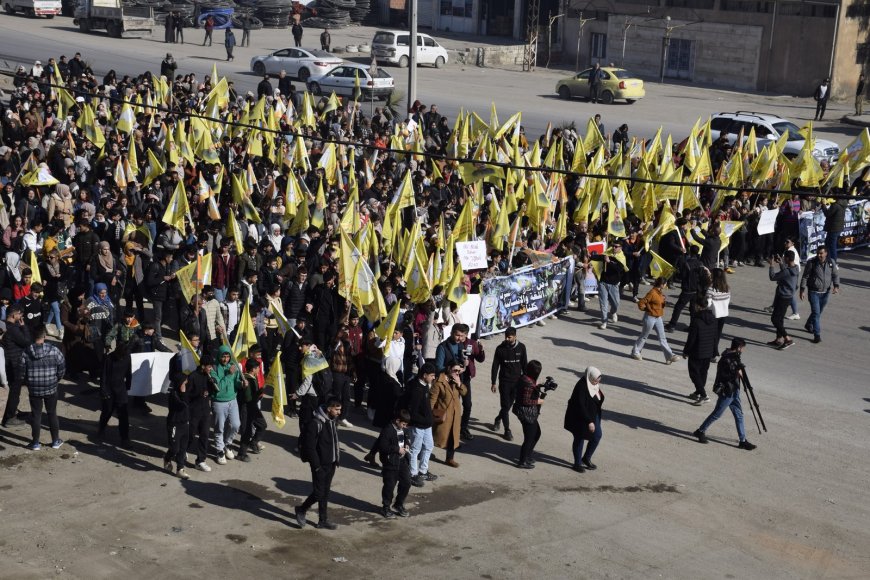
Protest in Hasaka city denouncing Turkish operations
SDF-linked media claimed ‘thousands’ participated in the march however footage from the protest shows a crowd more plausibly numbering hundreds. That said, similar, large-scale demonstrations can be expected to continue within SDF-controlled areas and form a standing consideration.
Meeting between SDF and ENKS expected in coming days
On 27 January, Faisal Youssef, spokesperson for the Kurdish National Council (ENKS), announced an upcoming meeting between General Mazloum Abdi of the SDF and senior leaders of the ENKS. The meeting – which is facilitated by the international coalition officials – aims to unify Kurdish political efforts. The date for the meeting was not specified but Youssef said it would likely take place in the “coming days.”
CENTRAL REGION (Including Idlib, Hama, Latakia, Tartous, Hama & Homs)
Sectarian tensions reported in Homs and Hamas provinces
Instances of sectarian tensions continue to be reported within HTS-controlled areas of Homs and Hama provinces. On the morning of 27 January, according to multiple reports, an armed group traveling in three vehicles and claiming affiliation with HTS entered the Anza village in Hama province. The group reportedly entered homes, assaulted and even killed some Alawite residents. According to some reports, including by the Syrian Observatory for Human Rights, five civilians were killed in total, with the victims including an elderly man and a child. While the incident was widely reported and corroborated by other sources, the claimed fatalities have not been confidently verified and it is worth noting that the SOHR has a tendency to exaggerate casualty rates in their reporting. Regardless, the incident corroborated a trend of sectarian violence within HTS-controlled areas that remains a source of concern and is set to undermine trust and the legitimacy of the government should it continue.
Separately, in Hom province, social media sources reported that an armed group opened fire and vandalized an Alawite Shrine in Hamour Umm al-Azm village and vandalized it from the inside. Pictures from the scene depicted bullet holes and limited material damage, with the incident consistent with recent reports of sectarian violence in the area.
Protests in Latakia city linked to student and teacher demands
Two separate demonstrations were reported over the review period in Lattakia city. On 27 January, dozens of students from the Faculty of Economics at Lattakia University staged a sit-in to demand the dismissal of Brigadier General Radwan Ammar. Separately, hundreds of teachers protested in front of the Education Directorate in the city. They opposed decisions by the Minister of Education requiring teachers to return to the governorate where they were originally appointed. Both events unfolded peacefully and without disruptions.

 and then